

Being told you need a root canal can feel unsettling, but modern endodontic care is designed to relieve pain and preserve your natural tooth with predictable results. A root canal is a routine dental treatment that removes diseased tissue from inside the tooth, eliminates infection, and restores comfort so you can return to normal eating and speaking.
Our team uses current techniques and gentle, patient-centered care to make the experience as comfortable as possible. Dental Care of Islington emphasizes clear explanations and careful treatment planning so you understand why a root canal is recommended and what to expect from start to finish.
Preserving your own tooth whenever feasible is usually the best long-term choice for oral health. When a tooth’s internal tissues are damaged by decay, trauma, or repeated dental work, a root canal removes the source of infection and allows the remaining tooth structure to function normally. Keeping your natural tooth helps maintain proper bite forces, prevents adjacent teeth from shifting, and supports overall jawbone stability.
Root canal therapy is much more conservative than extraction followed by replacement. With successful treatment and an appropriate restoration, a treated tooth can remain strong and useful for many years. Advances in instruments, disinfection methods, and filling materials have improved outcomes and made treatment quicker and more predictable than in past decades.
Choosing to save a tooth also reduces the need for more extensive procedures later on. Replacing a missing tooth often involves implants, bridges, or partial dentures, each of which has its own considerations. When a tooth can be reliably restored after endodontic care, patients frequently experience fewer interventions and better long-term results.

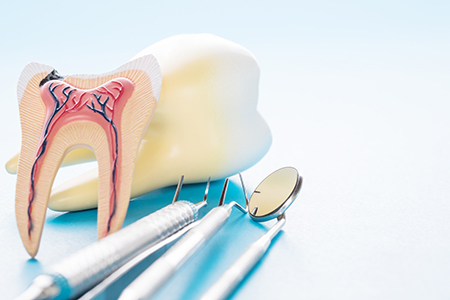
At the center of each tooth is the pulp — a network of soft tissue that contains nerves, blood vessels, and connective tissue. The pulp helps teeth develop and provides internal nourishment while the tooth matures. Once a tooth is fully formed, it can survive without the pulp, but when that tissue becomes inflamed or infected, the result can be intense sensitivity, pain, and risk of spreading infection.
Decay that reaches deep into the tooth, a severe crack or fracture, or repeated restorative procedures can expose and damage the pulp. Trauma — even without a clear fracture — may also injure the internal tissues and lead to discoloration or delayed symptoms. In some cases an infection develops slowly and causes little pain at first, making regular dental exams important for early detection.
When the pulp cannot recover on its own, treatment is recommended to remove the damaged tissue and disinfect the canals inside the root. This stops the infection, relieves symptoms, and prevents further breakdown of surrounding bone and gum tissues.
Not every ache signals a need for root canal therapy, but certain warning signs should prompt a prompt dental evaluation so appropriate care can begin before the problem worsens.
Some teeth with a compromised pulp give clear warning signals, while others show more subtle signs. Pain that lingers, sensitivity that interferes with eating or drinking, visible changes in the tooth, and swelling around the gumline are all potential indicators that the inner tissues are affected. An evaluation that includes clinical testing and imaging helps determine whether root canal therapy is the best option.
Timely diagnosis is important: addressing a troublesome tooth early can limit the extent of infection and improve the ease and success of treatment. Even a tooth without pain may show radiographic evidence of change that calls for care, underscoring the value of regular checkups.
Below are several frequent findings that often lead clinicians to recommend endodontic treatment. If you experience any of these, schedule an exam to review options and next steps.
A continuous toothache — especially one that wakes you at night or keeps getting worse — often signals deep decay or an infected pulp. While not every toothache requires a root canal, persistent pain should be evaluated promptly to prevent complications.
Intense, lingering sensitivity to temperature changes can indicate that the pulp is inflamed. If the reaction does not subside after the hot or cold source is removed, further assessment is warranted.
Discomfort brought on by chewing or light pressure may reflect pressure within the tooth or inflammation of the supporting tissues. This symptom sometimes accompanies cracks that allow bacteria to reach the pulp.
A tooth that becomes darker over time can suggest internal changes from trauma or necrosis of the pulp. While color changes alone don’t always require a root canal, they are a sign for careful evaluation.
Structural damage can expose the pulp to contaminants and infection. Even a small, apparently minor crack can lead to significant internal problems beneath the surface.
Localized swelling or a small pimple-like bump on the gum near a tooth often points to an abscess or draining infection. Prompt treatment is important to manage infection and discomfort.
If the tissues supporting a tooth are affected by infection, the tooth may feel mobile. Addressing the source of infection typically allows healing and stabilization.

Delaying treatment of an infected or inflamed pulp can allow the problem to advance, increasing the complexity of care and the possibility of spread to surrounding bone or soft tissues. What starts as a localized issue in one tooth can eventually affect neighboring teeth or lead to broader oral health consequences if left unchecked.
Some teeth with pulp damage are asymptomatic, so routine examinations and X-rays are instrumental in identifying issues before they become urgent. Early intervention often means simpler procedures, faster recovery, and better preservation of the remaining tooth structure.
A timely root canal can also reduce the likelihood of an extraction. Once significant bone loss or structural compromise occurs, more extensive restorative work may be needed to replace a missing tooth. Acting sooner generally preserves more options for long-term oral health.
Contemporary root canal therapy combines careful diagnosis with precise techniques to remove diseased tissue and seal the tooth against reinfection. Treatment typically begins with a thorough exam and digital X-rays to evaluate canal anatomy and the extent of any infection. Local anesthesia is used to ensure comfort, and a rubber dam is often placed to isolate the tooth and keep it clean and dry.
The dentist or endodontist will create a small access opening and gently remove the inflamed or infected pulp. The canals are shaped and disinfected using specialized instruments and irrigating solutions to eliminate bacteria and debris. Once clean, the canals are filled with a biocompatible material that seals the space to prevent future contamination.
Some teeth can be treated in a single visit, while others — especially those with complex anatomy or active infection — may require two or more appointments. If anxiety is a concern, you can discuss sedation options with your clinician to make the experience more relaxing. After the internal work is complete, the tooth receives a temporary or permanent filling, and most teeth will need a final crown or onlay to restore strength and function.
After your procedure, it's normal to have some tenderness in the treated area for a few days while surrounding tissues heal. Over-the-counter pain relievers are often effective for managing discomfort; if stronger medication or antibiotics are necessary, your clinician will provide clear instructions. Completing any prescribed medications and following post-treatment guidance supports a smooth recovery.
A treated tooth remains more vulnerable to fracture until it receives a permanent crown or suitable restoration. For that reason, rebuilding the tooth in a timely manner is an important step in achieving a durable outcome. Avoid chewing hard or sticky foods on the treated side until your permanent restoration is in place.
Good home care — brushing twice daily, flossing, and attending regular dental checkups — helps maintain the health of the treated tooth and the tissues around it. When properly restored and cared for, teeth that have undergone root canal therapy can provide decades of reliable function.
At Dental Care of Islington, we prioritize clear communication before and after treatment so you know what to expect and how to protect your investment in oral health. If you notice increasing pain, swelling, fever, or any new concerns after treatment, contact our team for prompt evaluation.
In summary, root canal therapy is a well-established, tooth-preserving procedure that can relieve pain, eliminate infection, and restore function. If you have symptoms that concern you or your routine exam uncovers a problem, please contact us for more information about your options and next steps.


A root canal is a dental procedure that removes diseased or infected tissue from the inside of a tooth to relieve pain and stop the spread of infection. The pulp chamber and root canals are cleaned, disinfected, and sealed so the remaining tooth structure can function normally. Treatment preserves the natural tooth and helps maintain proper bite forces and jawbone support.
Root canal therapy is recommended when the pulp is irreversibly inflamed or infected due to deep decay, trauma, or repeated dental procedures. Early diagnosis based on symptoms and imaging often leads to simpler treatment and a better long-term outcome. Your clinician will explain why treatment is advised and review alternatives when appropriate.
Determining whether a tooth can be saved begins with a thorough clinical exam and diagnostic imaging, which may include digital X-rays or cone-beam CT for complex anatomy. The dentist evaluates the extent of decay, the presence of a fracture, the condition of surrounding bone, and the restorability of the tooth. These factors together help predict the likelihood of a successful, durable outcome.
If the tooth has sufficient remaining structure to support a final restoration and there is no uncontrolled systemic or local condition that would compromise healing, root canal therapy is often a viable option. In some cases a referral to an endodontist is recommended for especially challenging anatomy or retreatment. Your provider will discuss the expected prognosis and recommended restorative plan.
Modern root canal therapy begins with local anesthesia to ensure comfort and isolation of the tooth using a rubber dam to keep the area dry and free from contamination. The clinician creates a small access opening, locates and shapes the canals with specialized instruments, and uses irrigating solutions to disinfect the internal spaces thoroughly. Once clean, the canals are filled with a biocompatible material that seals them against reinfection.
Depending on complexity and infection status, treatment may be completed in a single visit or require two or more appointments with placement of a temporary restoration between visits. Advanced imaging and magnification improve accuracy and predictability of the procedure. Your dentist will review each step with you and answer questions about the process.
Local anesthesia makes most root canal procedures comfortable, and many patients experience little to no pain during treatment. Clinicians also offer sedation options for patients with anxiety to help ensure a calm, controlled experience. Communication about comfort levels before and during the visit helps the team tailor care to your needs.
After the procedure it is normal to have some tenderness for a few days as surrounding tissues heal, and this is usually managed with over-the-counter pain relievers unless stronger medication is specifically prescribed. If pain increases, swelling develops, or you have a fever after treatment, contact the office for prompt evaluation. Following post-operative instructions minimizes complications and supports recovery.
Recovery from a routine root canal typically involves a few days of mild soreness as healing progresses, with most patients resuming normal activities the same day or the next. Eating soft foods and avoiding hard or sticky items on the treated side until the tooth is fully restored reduces the risk of damage to the temporary filling. Good oral hygiene supports healing and helps prevent new infections.
The treated tooth often requires a final crown or onlay to restore full strength, and placement of that restoration is an important step in the long-term success of the tooth. Your dentist will advise when the permanent restoration should be placed and provide instructions for caring for the tooth between visits. If symptoms persist beyond a few days or worsen, schedule a follow-up appointment for reassessment.
Many teeth that undergo root canal therapy are more brittle and susceptible to fracture because the internal pulp has been removed and some tooth structure may have been lost during access. A crown or onlay restores the tooth's shape and function, protects the remaining tooth structure, and helps distribute biting forces evenly. Timely placement of a definitive restoration improves the tooth's durability and reduces the risk of future complications.
The type of restoration depends on the tooth's location, amount of remaining structure, and occlusal forces it must withstand. Your dentist will recommend the most appropriate restoration and timeline based on the clinical situation. Maintaining regular dental visits ensures the restoration and surrounding tissues remain healthy over time.
Although root canal therapy has a high success rate, failure can occur due to persistent infection, undetected canals, recurrent decay, or new trauma that compromises the treated tooth. Signs of a complication include increasing pain, swelling, the return of sensitivity, a draining sinus tract, or a tooth that feels loose. Radiographic changes may also reveal persistent or new areas of bone loss around the root.
If symptoms suggest a problem, retreatment, endodontic surgery, or extraction may be considered depending on the specific cause and overall prognosis. Prompt evaluation increases the options available and often simplifies management. Your dentist will discuss the recommended path and refer to an endodontist when specialized care is needed.
Saving a natural tooth with root canal therapy is typically the preferred approach when the tooth is restorable, because maintaining the original tooth preserves natural bite function and helps prevent adjacent teeth from shifting. Extraction followed by replacement options such as implants, bridges, or partial dentures can restore function but generally involve additional procedures and considerations for neighboring structures. The best choice depends on the tooth's condition and the patient's overall oral health.
When feasible, endodontic treatment combined with an appropriate restoration can offer a durable, conservative solution that avoids the need for more extensive reconstruction. Your clinician will review the risks and benefits of each option and tailor recommendations to your oral health goals. Shared decision-making ensures the selected plan aligns with your preferences and long-term needs.
Root canals can vary in complexity depending on tooth anatomy: front teeth usually have single, straighter canals, while premolars and molars commonly have multiple, curved canals that require more intricate shaping and cleaning. Previously treated teeth may present additional challenges such as calcified canals, old filling materials, or restoration-related access that can complicate retreatment. Advanced imaging and magnification assist clinicians in planning and executing care for these varied situations.
Specialized techniques and instruments, including rotary files, ultrasonics, and three-dimensional imaging, improve the clinician's ability to manage complex canal systems and retreat cases. In many instances referral to an endodontic specialist is recommended for teeth with unusual anatomy or prior failed treatment. Discussing these factors in advance helps set expectations for the procedure and likely outcome.
After treatment, maintain excellent oral hygiene by brushing twice daily and flossing once daily, and avoid chewing on hard or sticky foods until the permanent restoration is placed. Follow any specific instructions provided by your clinician regarding medications, eating, and temporary filling care, and keep your scheduled follow-up and restorative appointments. Timely placement of the final crown or onlay is important to protect the treated tooth.
If you experience increasing pain, swelling, persistent fever, a draining sore, or any sudden change in how the tooth feels, contact Dental Care of Islington for prompt evaluation. Early attention to post-treatment concerns helps identify complications and allows the team to recommend appropriate next steps. Open communication before and after treatment supports the best possible long-term result.

Ready to book your next dental appointment or have questions about our services, treatment options, or what to expect during your visit?
We make it easy to connect with our team. Whether you need help scheduling a visit, want to learn more about treatment options, or have any dental concerns, our friendly staff is here to assist you. You can call us, email us, or use our convenient online contact form—whatever works best for you. Take the first step toward a healthier, more confident smile and contact Dental Care of Islington today.
Our Sister Office: Dental Care of Wilmington
Back to top