

At Dental Care of Islington, our first priority is preserving your natural teeth whenever possible. Still, there are situations where extracting a tooth is the most responsible step to protect your long-term oral health. Removal is considered only after careful evaluation and when restoration would not reliably restore function or comfort.
Decisions about extractions are driven by clear clinical reasons — from teeth that are badly broken to infections that threaten surrounding structures. Removing a problematic tooth can stop the spread of infection, relieve ongoing pain, and create space needed for proper bite alignment or orthodontic care. We focus on making sure you understand why extraction is recommended and how it fits into your overall treatment plan.
Our team works to balance safe, evidence-based care with attention to your comfort and concerns. If an extraction is advised, we will discuss alternatives, explain the procedure, and plan follow-up care so you feel informed and confident about the next steps.
Primary (baby) teeth that are retained past their expected time or are damaged
Some baby teeth fail to loosen or fall out as the permanent tooth matures. When a primary tooth remains stuck in place, it can interfere with normal eruption patterns, cause alignment problems, or block a permanent tooth. In these cases, timely removal helps guide proper development of your child's smile.
Permanent teeth with irreparable decay or structural damage
When decay advances beyond the point where restorations can reliably restore strength and form, extraction becomes a safer option. Severe breakdown of crown structure or damage that reaches the tooth’s nerve can leave a tooth non-restorable and at risk for recurrent infection.
Cracked or fractured teeth that cannot be saved
Fractures vary widely in severity. If a crack extends below the gumline or into the root such that predictably restoring the tooth is unlikely, removal may be the recommended course to prevent ongoing pain or infection.
Advanced periodontal disease weakening the tooth’s support
Periodontal (gum) disease can break down the bone and soft tissues that hold teeth in place. When a tooth has become increasingly mobile or the supporting structures are compromised, extraction may be required to maintain oral health and prevent further complications.
Wisdom teeth that are impacted, poorly positioned, or decayed
Third molars often lack sufficient space to erupt properly. Impacted or malformed wisdom teeth can cause crowding, infection, or damage to adjacent teeth. Removing problematic third molars—often at an appropriate young adult age—can prevent future issues.
Extractions as part of orthodontic or restorative planning
When jaw size and tooth size are mismatched, selective removal of one or more teeth may be recommended to create space for proper alignment and bite function. Extractions can be an intentional, planned step within a broader orthodontic or restorative treatment plan.

Before any extraction, we conduct a comprehensive evaluation to ensure the safest possible outcome. This includes reviewing your medical history, current medications, and any chronic conditions that could affect healing. Sharing complete and accurate information about your health helps us tailor the care plan and determine if additional precautions are necessary.
We typically obtain radiographs to inspect root shape, proximity to vital structures, and the overall condition of surrounding bone and teeth. These images guide the choice between a simpler removal and a more involved surgical approach. If a tooth is fragile, broken below the gumline, or impacted, imaging is essential for safe planning.
If you take blood thinners, have a heart condition, or are under treatment for a systemic illness, we will coordinate care with your medical providers as needed. We’ll also discuss anesthesia and comfort options so you know what to expect, whether you’ll receive local anesthesia alone or additional sedation for relaxation.
Local anesthesia is the standard means to numb the area during an extraction, and it is highly effective for most patients. For those with anxiety, complex procedures, or special medical needs, additional sedation options can be offered to promote relaxation and reduce discomfort. We will explain the benefits and considerations for each option and help you choose what best fits your situation.
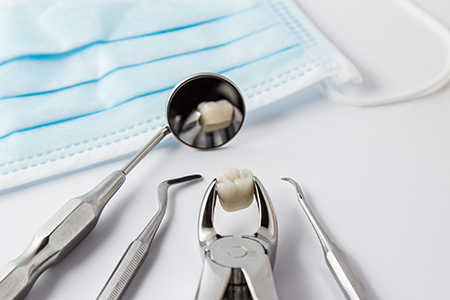
The technique used for extraction depends on how the tooth sits in the mouth and the condition of its roots. A “simple” extraction is performed on a tooth that is fully visible and can be removed without an incision. Your dentist will numb the area thoroughly, then loosen and remove the tooth with controlled instruments — the process is efficient and typically well tolerated.
When a tooth is fractured at or below the gumline, is impacted, or has root anatomy that complicates removal, a surgical extraction may be required. Surgical removals involve a small incision in the gum, and occasionally removal of a modest amount of overlying bone to access and remove the tooth safely. For particularly complex cases, we may refer you to an oral surgeon who specializes in these procedures.
Throughout the extraction we prioritize gentle technique and patient comfort. Hemostasis measures, careful tissue handling, and appropriate post-operative instructions reduce the chance of complications and support an easier recovery. We will review follow-up steps and the timeline for healing before you leave the office.
Pre-procedure imaging—often including digital radiographs—helps us map the extraction and anticipate any challenges. If a case requires specialist care, our team coordinates referrals and shares your records to make the transition smooth. Our goal is that you always have a clear plan and know who will manage each part of your care.

Recovery begins immediately after the procedure. In most cases, we place gauze at the extraction site and ask you to apply steady pressure to control bleeding during the first hour. Slight oozing for up to 24 hours can be normal, but heavy bleeding or prolonged oozing should prompt you to contact our office for guidance.
Swelling is common and usually peaks within 48 hours. Applying ice to the face in short intervals during the first day reduces swelling and discomfort. Rest, avoiding strenuous activity, and keeping the head elevated can also help the healing process in the initial days after surgery.
Following the first 24–48 hours, maintaining good oral hygiene around the site—without disturbing the clot—is important. Gentle cleaning of adjacent teeth, and later rinsing with a mild saltwater solution, helps keep the area free of debris and supports recovery. We will provide specific instructions tailored to the complexity of your extraction.
Control bleeding with gauze
Bite gently on the provided gauze and replace it as instructed until bleeding subsides. If heavy bleeding continues after repeated attempts, reach out to the practice.
Avoid accidental injury while numb
Because the lip, cheek, and tongue can remain numb for several hours, take care to avoid biting or burning these tissues until sensation returns.
Follow medication instructions carefully
If antibiotics are prescribed, take the full course as directed. For pain, start with recommended analgesics before anesthesia wears off and use prescription medications only as instructed.
Protect the developing clot
Avoid rinsing vigorously, using a straw, or smoking in the first week, as these actions can dislodge the clot and lead to delayed healing or dry socket.
Manage swelling and diet
Use ice packs intermittently on day one and stick to soft, cool or lukewarm foods for several days. Avoid hot, spicy, or crunchy foods that could irritate the site.
Keep oral care gentle and consistent
Brush and floss the rest of your mouth as usual, taking care around the extraction area. After 24–48 hours, gentle saltwater rinses help keep the socket clean.
Attend any recommended follow-up
If sutures were placed, or if we need to monitor healing more closely due to infection or complexity, return for your scheduled follow-up appointment so we can verify progress and address concerns.
If you experience unusual symptoms such as persistent severe pain, swelling that worsens after 48–72 hours, fever, or a foul taste that does not improve, contact our team for evaluation and guidance.
After a tooth is removed, we will discuss whether and when to replace it. Missing teeth can affect chewing efficiency, neighboring teeth, speech, and long-term jawbone health. Replacement options commonly include removable dentures, fixed bridges, or dental implants — each option has specific indications based on your oral health, bone support, and personal goals.
Dental implants are often recommended when long-term function and aesthetics are priorities, as they help preserve bone and restore a natural feel. Bridges can be a good choice when adjacent teeth are solid and can support the restoration, while partial or full dentures remain a reliable solution for broader tooth loss. We will review the pros and cons of each approach and help you choose the best path forward.
When a complex extraction is required, or when implant placement is being considered, our team will coordinate treatment steps and specialist care as needed to ensure a smooth progression from removal to restoration. Planning ahead helps protect both your immediate recovery and your future oral health.
Tooth extraction is a carefully considered treatment used when preservation is not feasible or when removal better protects overall oral health. Our team focuses on clear communication, attentive planning, and comfortable, competent care at every stage — from evaluation and preparation through the procedure and recovery. Dental Care of Islington is committed to guiding patients through this process and discussing sensible replacement options when appropriate.
If you have questions about whether an extraction is right for you or would like more information about what to expect, please contact us for more information.


Extractions are recommended when preserving a tooth would not reliably restore function or comfort because of severe decay, fracture, infection or loss of support from gum disease. Your dentist makes this decision after a careful clinical exam and appropriate imaging to assess root shape, bone support and proximity to vital structures. The goal of removal is to stop infection, relieve pain and protect surrounding teeth and tissues.
Extraction may also be part of a broader treatment plan, such as creating space for orthodontics or preparing for a restorative solution like implants or bridges. We always discuss alternatives and the expected benefits and risks before recommending removal. Clear communication helps you understand why extraction is the most responsible option for long-term oral health.
Preparation begins with a thorough review of your medical history, current medications and any chronic conditions that could affect healing. Your dentist may request recent radiographs or a CBCT scan to evaluate root anatomy and nearby structures, which guides whether a simple or surgical approach is safest. If you take blood thinners or have a heart condition, our team coordinates care with your medical providers to minimize risks and plan appropriate precautions.
We will also discuss anesthesia and comfort options so you know what to expect on the day of the procedure, including instructions about eating, drinking and medication use when sedation is planned. Arrange for a responsible adult to drive you home if you will receive sedative medications. Following the preoperative plan helps reduce complications and supports a smooth recovery.
Local anesthesia is the standard method to numb the area and is highly effective for most extractions, providing targeted pain control while you remain conscious. For patients with anxiety, complex surgical needs or special medical considerations, we offer additional sedation options to promote relaxation and reduce discomfort during the procedure. Your dentist will explain the risks and benefits of each option and recommend what best fits your clinical needs and comfort level.
If deeper sedation is chosen, we provide tailored pre- and post-procedure instructions and monitor you closely throughout the visit to ensure safety. Certain sedation methods may require fasting and a companion to transport you home afterward. Discussing your medical history and preferences in advance allows us to select the safest and most comfortable approach.
A simple extraction is performed on a tooth that is fully visible in the mouth and can be removed without an incision, typically using elevators and forceps after adequate local anesthesia. Surgical extraction is required when a tooth is impacted, fractured at or below the gumline, or has complex root anatomy that makes straightforward removal unsafe. Surgical cases often involve a small gum incision and, occasionally, minimal bone removal to access and remove the tooth carefully.
Surgical extractions may take longer and have a more involved recovery, so your dentist will explain the procedure, expected healing timeline and any special aftercare. For particularly complex or high-risk cases, we may refer you to an oral surgeon and coordinate the transfer of records and imaging. This collaborative approach ensures you receive care from the clinician best suited to manage your needs.
Initial care focuses on controlling bleeding, protecting the developing clot and managing pain and swelling. Bite gently on gauze for the first hour as instructed, avoid vigorous rinsing, refrain from using a straw and avoid smoking for at least the first week to reduce the risk of dislodging the clot. Apply ice intermittently during the first 24 hours to limit swelling and rest with your head elevated to support the healing process.
After 24 to 48 hours, begin gentle saltwater rinses to keep the area clean and continue to brush and floss the rest of your mouth carefully, avoiding direct trauma to the socket. Take prescribed medications as directed and contact the office if you experience uncontrolled bleeding, severe pain that does not improve with medication, or signs of infection. Attending any scheduled follow-up appointments lets us verify healing and remove sutures if necessary.
Most extractions heal without significant problems, but complications can include prolonged bleeding, infection, dry socket (alveolar osteitis), nerve irritation or unexpected swelling that worsens after the first 48 to 72 hours. Dry socket typically presents as severe, throbbing pain a few days after extraction and may be accompanied by a foul taste or odor; it requires evaluation and targeted treatment. Infection can cause increasing pain, persistent swelling, fever or drainage and should be addressed promptly.
Contact our office if you experience heavy or continuous bleeding despite following instructions, fever, worsening swelling after 48 hours, severe uncontrolled pain or any new numbness that persists beyond the expected healing period. Early assessment allows timely intervention and reduces the chance of more serious issues. Our team will provide clear guidance on next steps and any necessary in-office care.
Many routine extractions are safely and effectively performed by a general dentist using local anesthesia, but certain situations are better managed by an oral and maxillofacial surgeon. Referral is often recommended for heavily impacted wisdom teeth, teeth with complex root anatomy, medical conditions that increase procedural risk, or when advanced sedation or hospital-based care is appropriate. The practice coordinates referrals and transfers imaging and records to ensure continuity of care.
Choosing a specialist does not mean your regular dentist will not remain involved; we work collaboratively to plan treatment and follow-up so your overall care is seamless. If a referral is advised, we will explain the reasons, what to expect at the specialist visit and how we will support you before and after the procedure. This team-based approach prioritizes safety and predictable outcomes.
Yes. When primary (baby) teeth fail to exfoliate on schedule or are structurally damaged, they can interfere with normal eruption of permanent teeth and contribute to misalignment or impaction. Timely removal of a retained primary tooth can guide proper development of the permanent dentition and reduce the need for more extensive orthodontic treatment later. Your dentist evaluates eruption patterns and will recommend extraction when it supports healthy growth and alignment.
The decision to extract a primary tooth considers the child’s overall dental development, space needs and the condition of the surrounding teeth and gums. We take a conservative, evidence-based approach and discuss alternatives and timing with parents so they understand how removal fits into a broader treatment plan. Pediatric comfort measures and clear postoperative instructions help ensure a positive experience for young patients.
Wisdom teeth are commonly removed when they are impacted, positioned poorly, decayed, causing recurring infections or damaging adjacent teeth, or when they threaten future oral health due to lack of space. Removal is often recommended in young adulthood when roots are less developed and recovery is typically quicker, but the timing is individualized based on clinical exam and imaging. Not all wisdom teeth require extraction; some remain healthy and fully functional without causing problems.
Your dentist will use radiographs to assess eruption, angulation and proximity to nerves or sinuses and discuss the potential benefits and risks of removal. If extraction is advised, we will explain the procedure, anesthesia options and expected recovery so you can make an informed decision. When specialist care is appropriate, we coordinate referrals to ensure you receive the most suitable treatment.
Replacing a missing tooth is important for chewing function, speech, adjacent tooth stability and long-term jawbone health, and options include dental implants, fixed bridges and removable partial dentures. Dental implants are often recommended when preserving bone and restoring a natural feel are priorities because an implant replaces both the tooth and the root, helping maintain underlying bone. Bridges can restore function when adjacent teeth are healthy enough to support a restoration, while removable options remain useful for broader tooth loss.
Our team reviews the clinical factors that determine the best replacement, such as bone volume, overall oral health and your personal goals, and we outline a stepwise plan when implants or complex restorations are considered. Coordination with specialists for bone grafting or implant placement is arranged as needed, and we discuss timing so that restorative steps follow healing safely and predictably. Dental Care of Islington helps patients weigh the pros and cons and choose a solution that balances function, appearance and long-term oral health.

Ready to book your next dental appointment or have questions about our services, treatment options, or what to expect during your visit?
We make it easy to connect with our team. Whether you need help scheduling a visit, want to learn more about treatment options, or have any dental concerns, our friendly staff is here to assist you. You can call us, email us, or use our convenient online contact form—whatever works best for you. Take the first step toward a healthier, more confident smile and contact Dental Care of Islington today.
Our Sister Office: Dental Care of Wilmington
Back to top